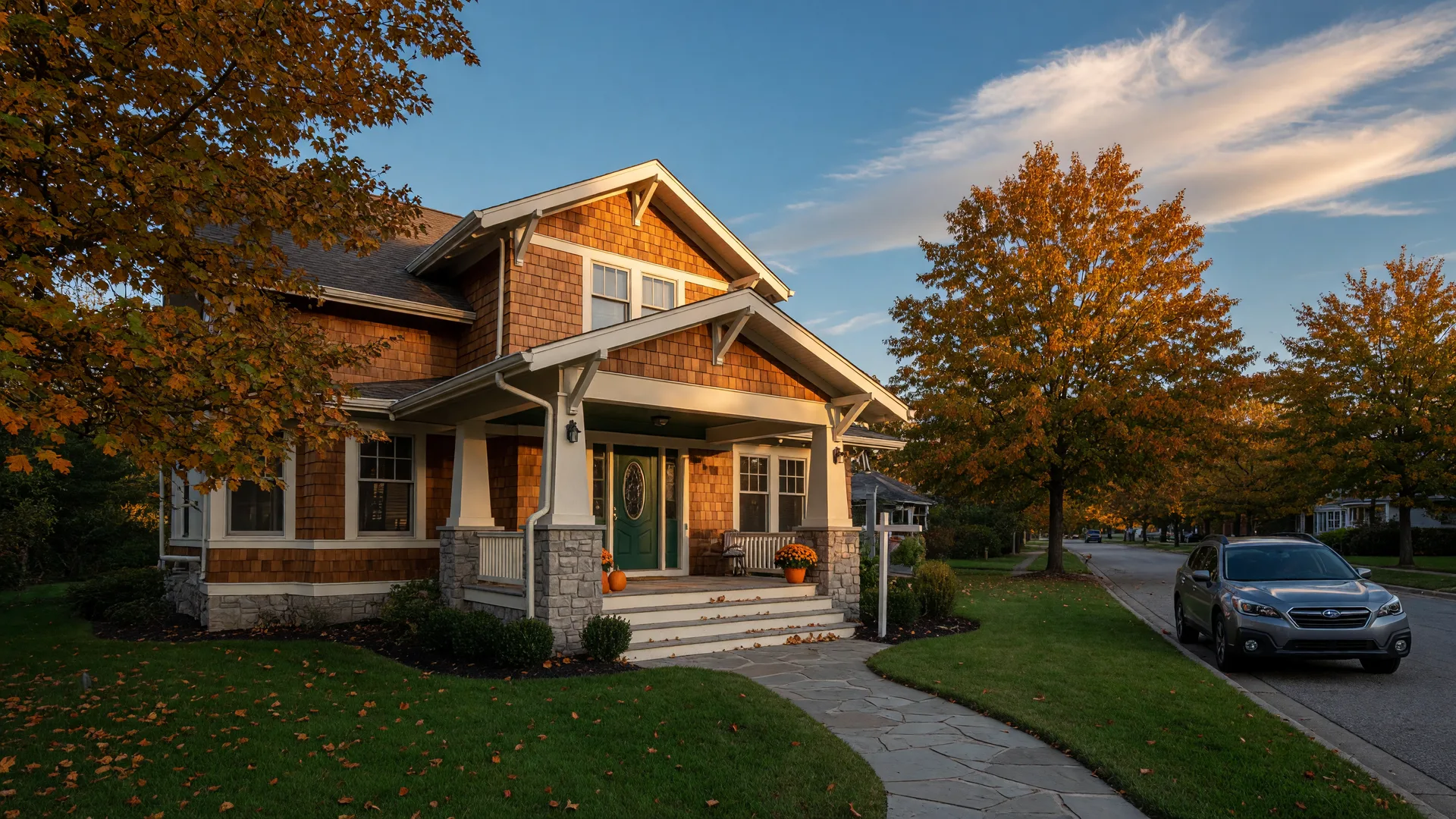
Buying a home in the 219 from out of state
Flights are optional. The honest step-by-step guide to buying in Lake, Porter, or LaPorte County from anywhere: the real process, the real numbers, and the rules that make it work.
Flights are optional. The honest step-by-step guide to buying in Lake, Porter, or LaPorte County from anywhere: the real process, the real numbers, and the rules that make it work.
More and more buyers are finding Northwest Indiana without leaving their home state, and the numbers explain why. Lake County's median sale price sat around $296,000 through mid-2026, according to Redfin, versus roughly $365,000 to $375,000 across the Chicago metro and about $425,000 in the city of Chicago itself. The process is built for remote buyers too: virtual tours, digital signatures, and remote online notarization are all routine here. This guide walks through every step of buying a home in Lake, Porter, or LaPorte County from out of state, with the honest numbers and the local details that matter before you sign anything.
The region sells three things that are increasingly hard to find together: real affordability, real space, and real access to Chicago. Northwest Indiana's metro median ran about $277,000 in the Indiana Association of Realtors' midyear 2026 report, well below the Chicago area's six-figure-plus premium, and the gap is the point for most buyers. Your housing dollar buys a bigger lot, a bigger house, and often a better school district a few dozen miles from the city.
~$296K
Lake County median sale price, mid-2026 (Redfin)
$365K–$425K
Chicago metro and city of Chicago medians, 2026
~$277K
Northwest Indiana metro median, IAR midyear 2026 report
And the commute story only strengthens the case. The South Shore Line runs commuter trains from stations in Hammond, East Chicago, Gary, and the newer Monon Corridor stops in Munster and Dyer straight into Chicago's Millennium Station, while I-80/94 and the Indiana Toll Road (I-90) connect every town in the region to the metro by car. City salary, small-town life, no parking garage.
Commute math is usually the first question from out-of-state callers. My commute guide has the real times by town, both by car and by rail, and the tolls and fares that go with them.
Buying remotely is less about magic and more about having the right team and the right sequence. Here is how a typical out-of-state purchase in the 219 actually flows:
You want someone who has closed homes for out-of-state buyers before, can video-call from the property, and will share honest market context, not just listings. A good local agent becomes your eyes and ears on the ground and your advocate across the whole process.
Ask lenders directly whether they routinely close loans for out-of-state buyers and whether they support remote online notarization. Pre-approval also tells you the real number you can shop with, which keeps every tour and offer honest from the start.
Most agents will walk a property with you live on a video call, showing the rooms, the lot lines, and the neighborhood street by street. Record or save every tour, and layer in online listing photos and any drone footage the listing offers. Narrow the list hard remotely, then verify favorites in person.
Your offer letter travels with a deposit that shows you are serious. In a competitive market, a well-priced offer with a solid deposit and flexible dates usually gets more attention than an all-cash lowball. Your agent will help you calibrate both to the neighborhood's real numbers.
The inspection is the single most important hour of the whole purchase, and you can be in the room for it without being in the room. Local inspectors know Lake County's clay soils, aging stock, and seasonal quirks. Plan to join the walkthrough by video call and ask questions in real time.
Once the offer is under contract, your lender orders the appraisal and finalizes underwriting. Keep every document request moving fast; the clock on your financing contingency does not pause because you live in another state.
Indiana runs closings through licensed title and escrow companies that search the property's history, handle the paperwork, and protect your ownership record. This is routine here, and it is one of the reasons out-of-state buyers can close without flying in thousands of documents.
Indiana law recognizes remote online notarization, so your closing papers can be signed and notarized over a live video call. Many buyers still choose to take one trip to walk the final property and sign in person, but that trip is a choice, not a requirement.
Three Indiana specifics are the reason the whole thing closes from 500 miles away. None of them are exotic, but all of them matter if you are coming from a state that does things differently.
Indiana is a title-company closing state. A licensed title or escrow company handles the search, the paperwork, and the settlement, which is exactly the setup that makes remote purchases smooth.
Indiana law does not require a real estate attorney at closing. Many buyers skip one entirely and rely on the title company and their agent. Bringing in an attorney to review your contract and title work is optional and always allowed if you want the extra layer.
Indiana authorized remote online notarization in 2018, with the rules taking effect July 1, 2019, and it also honors online notarizations performed by notaries in other states. Your closing can be completed end to end from your dining room in another state.
The 1% homestead cap, explained. Indiana caps the property tax bill on your primary residence at 1% of its assessed value, and that cap is written into the state constitution. Other residential property is capped at 2%. For buyers coming from high-property-tax states, this is often the line that makes the whole move work. You claim the homestead deduction on your primary home after closing, and the cap applies from there.
Every town in the 219 has its own personality, and the right one depends on your commute, your schools, and your idea of a Saturday. These are the shortlist regulars for remote buyers, each with its own neighborhood guide. Looking at Porter County instead? Valparaiso and Chesterton draw plenty of out-of-state buyers too, with downtown energy and strong schools worth a closer look:
Top-region schools, Centennial Park, and now the new Monon Corridor stations for the South Shore Line. The classic pick for Chicago commuters who want a strong school district.
The historic courthouse square, well-regarded schools, and the region's biggest sense of community. A favorite for families who want small-town life with everything nearby.
Newer construction, big retail access at US-41, and Lake Central schools. A practical, comfortable pick for suburban buyers.
Country roots with suburban growth, spacious lots, and the same strong Lake Central district. Quiet streets, bigger yards.
Small-town charm, a surprisingly strong restaurant scene, and easy reach to the new train stations. A rising pick for out-of-state buyers.
The largest natural lake in Northwest Indiana and the lakefront lifestyle that goes with it. For buyers who want water access and a vacation feel every day.
Golf culture, great diners, the Hoosier Prairie nature preserve, and a revitalized commercial strip that keeps prices friendlier than the western towns.
One trip can do a lot. When you do fly in, spend a full weekend: drive your future commute at the time you would actually drive it, walk the downtown and the parks, and sit in the parking lots outside the schools at dismissal. The towns that look right on a video call are the ones that still feel right when you slow down and watch a Tuesday afternoon happen.
Seeing the whole picture? My Moving to Northwest Indiana guide covers the commute, property taxes, cost of living, and schools in one place, and the commute guide has the town-by-town times. The family neighborhoods guide compares the school districts families ask about most. Want a shortlist built around your commute and budget? Send me both and I will point you the right way.
Common questions about purchasing a home in Northwest Indiana without living there.
Yes. Virtual showings, digital signatures, and remote online notarization make it routine for out-of-state buyers to complete a purchase without setting foot in Indiana. Most buyers still take one trip for the inspection and the final walkthrough when they can, but the process is built to work remotely.
No. Indiana is a title-company closing state, and many purchases close with just the title company, the agents, and the lender involved. Hiring an attorney to review your contract and title work is optional and always permitted if you want the extra protection.
Yes. Indiana authorized remote online notarization in 2018 with rules effective July 1, 2019, and it recognizes online notarizations performed by notaries in other states. That is the legal foundation for signing closing documents from another state.
The gap is significant. Lake County's median sale price was around $296,000, according to Redfin's mid-2026 data, while market trackers put the Chicago metro median around $365,000 to $375,000 and the city of Chicago near $425,000. The exact spread moves month to month, but the affordability story has been consistent.
Indiana caps the property tax bill on your primary residence, called a homestead, at 1% of its assessed value, with the cap written into the state constitution. Other residential property is capped at 2%. It is one of the most pleasant surprises for buyers relocating from higher-tax states.
Town by town, I can help you match the commute, the schools, the taxes, and the neighborhood to the life you are actually moving toward.